Can changing your job, partner, or where you live change your life?
Sometimes we believe a single decision will change our lives. A new job. A new city. A new partner. A fresh start. The first days often bring a sense of relief. Everything feels different, possibilities seem bigger, and the future appears more open. Then, after a while, familiar patterns begin to return. The same conflicts, the same doubts, or the feeling that we’ve somehow ended up in the same place again. It’s easy to conclude that we simply haven’t found the right place, the right job, or the right person.
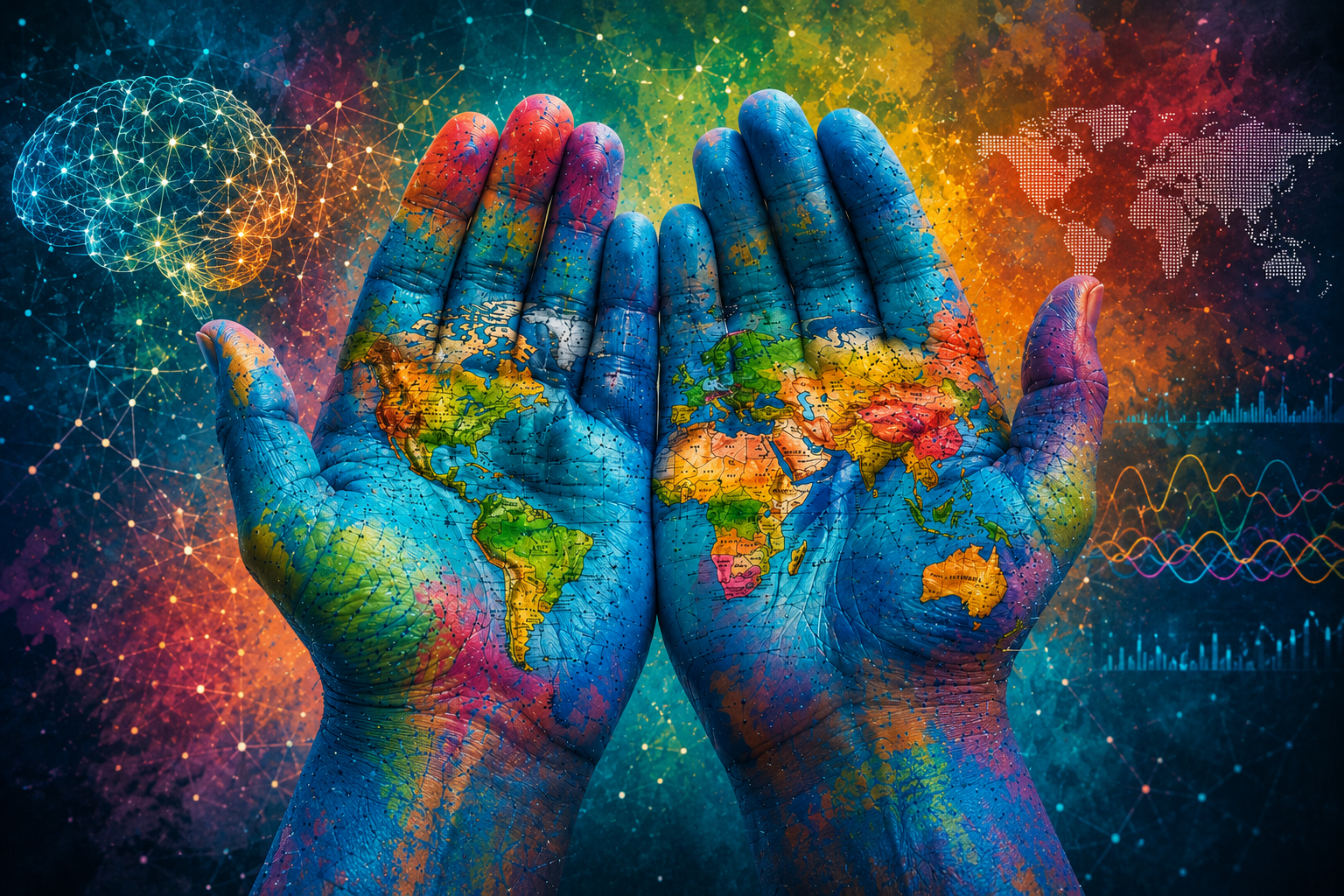
Alfred Korzybski captured this idea in one simple sentence: the map is not the territory.
A map helps us understand the world, but it’s only a representation of it. Today, neuroscience helps explain why this idea is so important. The brain constantly builds a model of the world from past experiences, relationships, emotions, and meanings, using it to predict what is likely to happen next.
That model is shaped by the family we grew up in, the way people treated us, the messages we heard as children, our culture, language, successes, disappointments, and countless everyday experiences that gradually connect into patterns. The more often a pattern repeats, or the stronger the emotions attached to it, the more likely it becomes part of our map of the world.
That’s why changing our surroundings rarely changes our lives on its own. Every new job, new city, or new relationship comes with the way we already see ourselves, other people, and the world around us. New circumstances can create different opportunities, but the way we notice, understand, and respond to them still depends largely on the map we carry with us.
We Choose What’s Familiar
It’s not unusual to hear someone say, I always end up with the same type of person. Even though the people were different, the relationships often ended in almost the same way. One partner was emotionally unavailable, another was excessively jealous, a third avoided difficult conversations. Every relationship seemed like a new story, yet something kept repeating.
Our map of the world shapes the way we interpret people, relationships, and our own experiences. It determines what feels familiar, natural, and expected. If we grew up surrounded by unpredictable relationships, tension, or poor communication, that kind of dynamic can feel like closeness. A calm and stable relationship may seem too quiet or even boring simply because it doesn’t match what our brain has learned to expect. The brain predicts familiar patterns more easily, and what it can predict often feels safer. That’s why familiar dynamics feel natural and easy to recognise, even when they don’t support healthier, more fulfilling relationships over time.
Change begins when we recognise that different situations often follow the same underlying pattern. We stop seeing each relationship as an isolated experience and begin to recognise it as part of the way our brain has learned about closeness, safety, and love.
The Same Map Follows Us to Work
A similar pattern often appears at work. Someone changes jobs several times and eventually concludes that every manager is the same. One doesn’t appreciate effort, another expects too much, a third always finds something wrong. Sometimes that reflects the workplace itself. Quite often, though, it reveals the way our map of the world interprets authority. Two people can receive exactly the same feedback, yet one sees an opportunity to learn while the other experiences it as criticism of their worth. The words are identical. The meaning they carry is different.
The way we experience authority usually begins much earlier. Parents, teachers, and other significant people leave lasting traces on our map of the world. Their words, tone of voice, expectations, and reactions gradually shape what later feels normal. Once we begin exploring our own interpretations, new paths appear alongside the familiar ones. For the first time, we notice there’s space between what happens and how we respond. That’s where our map of the world begins to change.
When the Map Changes
Our map of the world shapes the way we experience relationships and authority, but it also influences how we see ourselves, other people, and the opportunities life offers. Someone who’s spent years believing they’re not capable enough may overlook an opportunity that’s right in front of them. Someone who grew up with the belief that people can’t be trusted may struggle to recognise genuine goodwill. Once our map of the world becomes the only lens through which we see reality, we lose the ability to separate facts from our own interpretations.
Meanwhile, the world keeps changing. People change. We change too. A map we created ten or twenty years ago often no longer matches the territory we’re walking through today. That’s why it’s worth pausing from time to time and looking at the map itself, asking whether it’s still guiding us where we want to go.
Every time we expand it, we increase the number of possibilities we’re able to see. People we once struggled to understand begin to make sense. Situations that once felt impossible reveal new solutions. Decisions become clearer because we’re seeing them from a broader perspective. The map is still not the territory, but it can become a more accurate guide.
Curiosity Changes the Map
One reason it’s so difficult to recognise our own map of the world is that we experience it as reality itself. We rarely ask why someone immediately seemed untrustworthy, why we expected to fail in a particular situation, or why we dismissed certain possibilities without a second thought. Those judgements often feel like facts, even though they’re shaped by our previous experiences, relationships, culture, and the stories we’ve absorbed throughout life.
Only when we meet people who think differently or encounter experiences that don’t fit our expectations does it become clear that there are other ways of seeing the same situation. At that moment, more than a single opinion changes. The boundary of what we once believed was possible begins to shift.
Curiosity therefore plays an important role in expanding our map of the world. Every genuine question, conversation, or experience that encourages us to re-examine our first conclusion adds another dimension to it. Over time, the map becomes richer, more accurate, and more useful for the life we’re living today. People who remain curious throughout life often appear more open and calm because they’ve accepted that no map can ever capture the entire territory.
This way of thinking also changes the relationship we have with ourselves. When we begin seeing our conclusions as one possible interpretation rather than the only truth, we learn more easily from experience, accept feedback with greater openness, and adapt more effectively to change. We become better at distinguishing facts from assumptions and make decisions based on what’s actually in front of us rather than only on what we expected to see.
We Can Always Expand the Map
The greatest value of Korzybski’s idea, the map is not the territory, lies in the reminder that no view of the world is ever final. Every person we meet, every experience we live through, and every idea we genuinely try to understand can change the way we see ourselves and the world around us.
We build our map of the world throughout our lives. Most new experiences reinforce what’s already on it, which is why change is rarely quick or simple. Sometimes major life events, and sometimes the smallest moments, raise the question of whether our map still reflects the world as it is today. A conversation, a book, a journey, or a single question from another person can reveal a path we didn’t know existed. Change grows through new knowledge, but even more through the willingness to look at our map again, see what’s really on it, and redraw it with greater accuracy so it can include new territory.
Author Ivana Song.
Where clarity becomes direction. Inspired by Song.