When We Finally Pause
We often imagine vacation as something we should make the most of. We plan day trips, search for restaurants, explore new places, photograph every sunset, reply to messages, keep up with what everyone else is doing, and try to catch up on everything we didn’t have time for during the year.
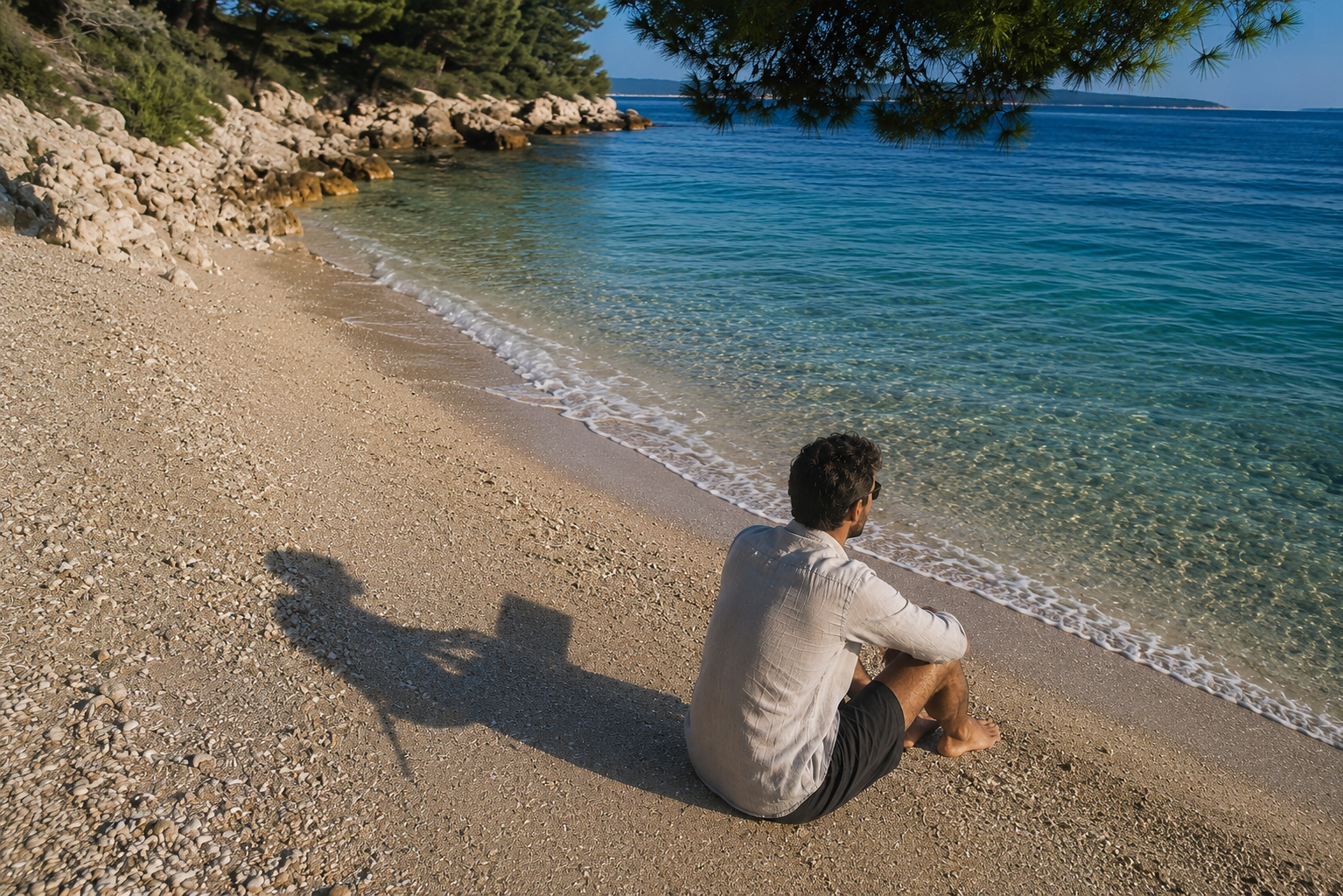
Then, somewhere between all those plans, a few unplanned minutes appear. We sit by the sea, our eyes drift toward the horizon, and for the first time in a long while there’s nothing we need to think about next. A few minutes later, boredom creeps in. We reach for our phone, and without realizing it, interrupt one of the most valuable processes a vacation can offer our brain.
Your Brain Needs Space Between Stimuli
We live in a world where there’s almost always something to watch, read, listen to, or solve. Every spare moment has become something to fill. Over time, the brain adapts to a constant stream of stimulation. One task replaces another. One notification follows the next. Our attention keeps shifting from what we’re doing now to what comes next.
When that rhythm suddenly stops, the silence can feel surprisingly uncomfortable. Yet this is exactly when the nervous system begins adjusting to a slower pace. Attention no longer has to constantly switch, the body gradually comes out of its state of readiness, and the mind stops expecting the next demand. A few minutes later, what first felt like emptiness begins to feel like calm. Only then can a vacation truly begin.
The Science Of Silence
We often think the brain’s most important processes take place when we’re fully focused on what we’re doing. But some of them become more active precisely when our attention is no longer occupied by what’s happening around us. While we’re answering emails, rushing from one meeting to another, planning our day, or trying to finish everything on our list, our attention remains directed toward the outside world. When that pace slows down, whether we’re sitting by the sea, walking through the woods, or quietly watching the sunset, the brain’s Default Mode Network (DMN) becomes more active.
This is when the brain finally has time to connect everything we’ve experienced throughout the day. It links experiences, processes conversations that stayed with us, and brings scattered pieces of information into a coherent whole.
Finally, Nothing Is Happening
You’re sitting in the shade. Children are playing nearby. Cicadas fill the air. The wind moves gently through the trees. No one is asking anything of you, and there’s nothing you need to solve. From the outside, it looks like you’re doing nothing. Inside, your brain is doing work it rarely has time for during the rest of the year. It’s organizing experiences, consolidating memories, connecting ideas, and calming the nervous system. It’s preparing you for whatever comes next.
You’ve probably come back from vacation and found that a problem which had been weighing on you for weeks suddenly doesn’t seem quite as overwhelming. You weren’t actively trying to solve it, yet something shifted. During your time away, your brain finally had the opportunity to process everything that had been pushed aside by the pace of everyday life. That’s why it often becomes easier to understand what’s been bothering us, why we keep going in circles around the same problem, or how to approach a situation we’ve been struggling with for weeks. Given enough time, this process helps us recognize patterns, make better decisions, and develop new ideas. That’s one of the reasons why a real break often brings more clarity than a few extra hours of work. Creativity isn’t just about talent. It also needs space.
The Cognitive Brilliance of Doing Nothing
Perhaps the greatest gift of a vacation is what we can bring home with us. Space for silence, for pauses, and for moments when our attention isn’t being pulled in ten different directions. A walk can simply be a walk. Silence can simply be silence. Even a few minutes without constant stimulation give the brain a chance to do work that rarely fits into the rhythm of everyday life.
The next time you find yourself thinking, I’m bored, whether you’re on vacation or simply going through an ordinary day, stay with that feeling for a few more minutes. Look around. Listen to the sounds around you. Let your thoughts wander. It may still seem as though nothing important is happening. In reality, those quiet moments are often among the most valuable gifts you can give your brain.
Author Ivana Song.
Where clarity becomes direction. Inspired by Song.